
Achieving Success with Mobile App Development using Low-Code Platforms: Tips and Best Practices
As the world becomes increasingly reliant on mobile technology, businesses are turning to mobile app development to stay competitive and meet the needs of their customers. However, traditional app development can be time-consuming, expensive, and require specialized technical skills.
Enter low-code platforms. These platforms provide a user-friendly interface and pre-built components that allow even non-technical users to create professional-grade mobile apps without the need for extensive coding knowledge. This not only saves time and money, but also allows businesses to be more agile and responsive to changing market demands.
But how can businesses achieve success with mobile app development using low-code platforms? Here are some tips and best practices to consider:
Start with a clear goal in mind
Before embarking on a mobile app project, it’s important to have a clear understanding of what the app is meant to accomplish. This includes identifying the target audience, the specific features and functionality the app will offer, and how it will improve the user experience.
Choose the right low-code platform
Not all low-code platforms are created equal, so it’s important to do your research and choose a platform that meets your specific needs and goals. This may include factors such as the level of support and training available, the number and quality of pre-built components, and the level of customization and integration with other systems.
Engage with the community
Many low-code platforms have active online communities where users can share tips, ask questions, and learn from each other’s experiences. Engaging with these communities can provide valuable insights and help you avoid common pitfalls and mistakes.
Utilize pre-built components and templates
One of the key advantages of low-code platforms is the availability of pre-built components and templates. These can save a significant amount of time and effort, and can provide a starting point for creating your own custom app.
Test, test, test
As with any software project, it’s important to test your app thoroughly to ensure it functions as intended and provides a positive user experience. This may include beta testing with a small group of users, and making adjustments based on their feedback.
Continuously improve and evolve
Mobile technology is constantly evolving, and your app should evolve along with it. This may include adding new features, improving existing functionality, and integrating with new technologies.
Choose Draftbit as your mobile app builder
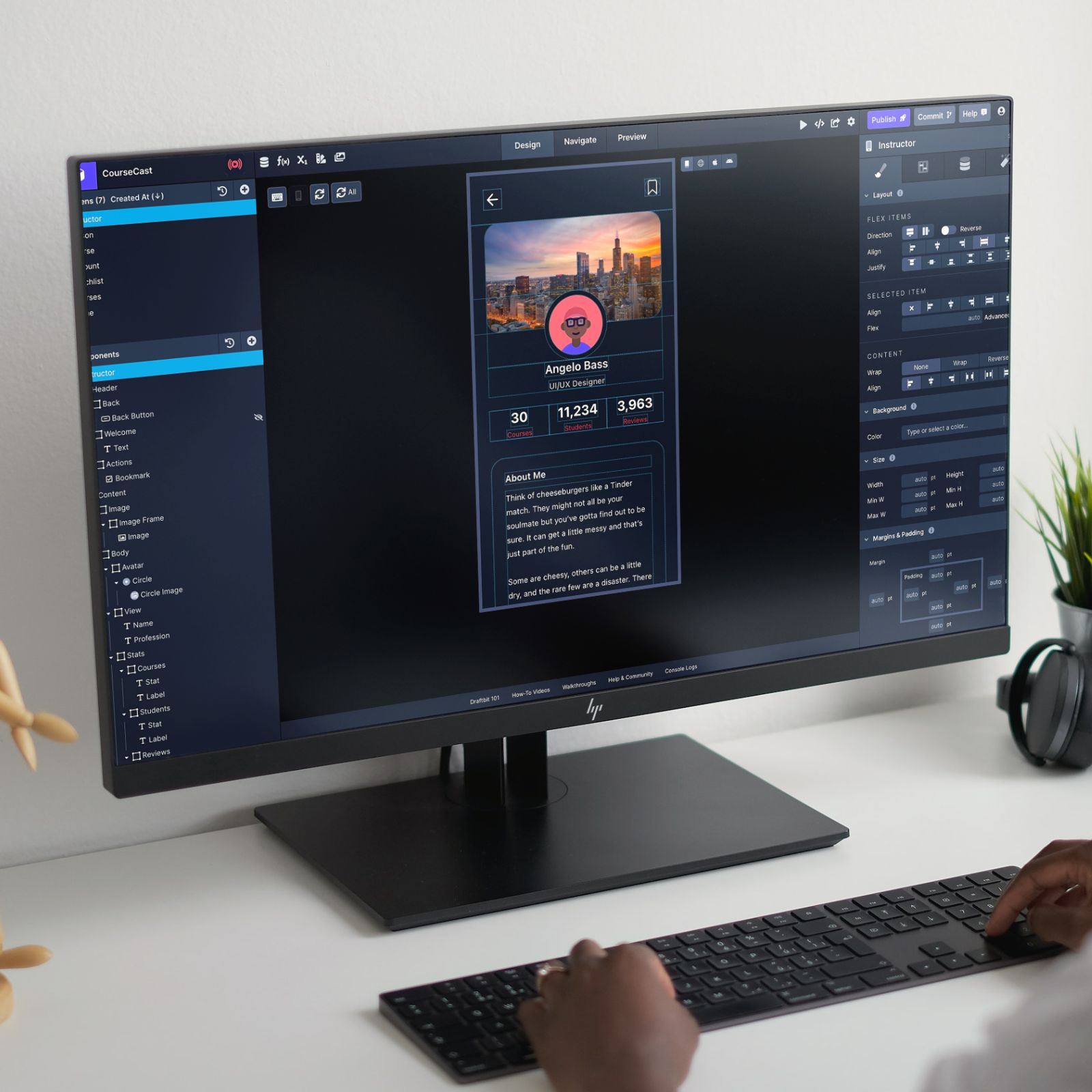
By following these tips and best practices, businesses can achieve success with mobile app development using low-code platforms like Draftbit. Draftbit lets you create mobile apps with a visual builder using pre-built components and templates. And once your app is ready for the world, Draftbit can publish it to the Google and Apple app stores for you.
We also offer development services provided by our in-house team of Experts if you’d prefer to not build the app yourself.
To explore all the ways Draftbit can help you bring your mobile app to life, get started with a free 14-day trial or schedule a chat to discuss your needs!